Comparing Preston Hollow's Gated And Non-Gated Living
July 9, 2026
July 9, 2026
Wondering whether a gated address in Preston Hollow is automatically the better choice? In this part of Dallas, the answer is usually more nuanced than that. If you are weighing privacy, flexibility, upkeep, and long-term fit, it helps to understand how Preston Hollow actually works on the ground. Let’s dive in.
Preston Hollow is best understood as a collection of micro-markets rather than one single, uniform neighborhood. The area is often used to describe a broader section of North Dallas south of LBJ, while the traditional core is commonly associated with Midway Road, Northwest Highway, Hillcrest Avenue, and Royal Lane.
That matters because gated and non-gated homes here can sit in very different settings. You may find open estate streets with large lots, gated luxury enclaves, condo and townhome pockets, and mixed-use areas such as Preston Hollow Village. In other words, the gate is only one part of the story.
The housing mix also helps explain why buyer priorities vary so much. D Magazine notes that 56.9% of the housing stock is detached single-family, and the average owner tenure is 14.3 years. That kind of stability often points to a market where lifestyle fit matters as much as first impressions.
In Preston Hollow, gated living often signals a more managed residential setting. Some luxury enclaves emphasize controlled access, privacy, and a curated look, with examples that include a 24-hour guardhouse, concierge services, and architectural guidelines.
For many buyers, that structure is appealing. If you value a more controlled entry experience and a neighborhood environment shaped by shared standards, a gated community may feel more aligned with your goals.
At the same time, it is important to look beyond the entrance. Gated living often comes with a denser layer of HOA oversight, plus regular dues that may support landscaping, shared maintenance, reserves, and common-area upkeep.
A gate can support privacy, but in Preston Hollow, the full benefit often depends on what sits behind it. A staffed entry or guard presence may shape day-to-day experience more than the gate alone.
Research cited in the report found that communities with gates, guards, and patrols have shown higher home prices in some cases, but guards and patrols were more influential than gates by themselves. That is a useful reminder that the real value often comes from the total package, not just the label.
The trade-off is straightforward. More structure can mean less flexibility.
In Texas, HOAs may regulate exterior issues such as landscaping, parking, pets, noise, and home modifications, within state-law limits. If you are considering a gated home, you will want to understand not just the monthly dues, but also how the rules may affect the way you live in and update the property.
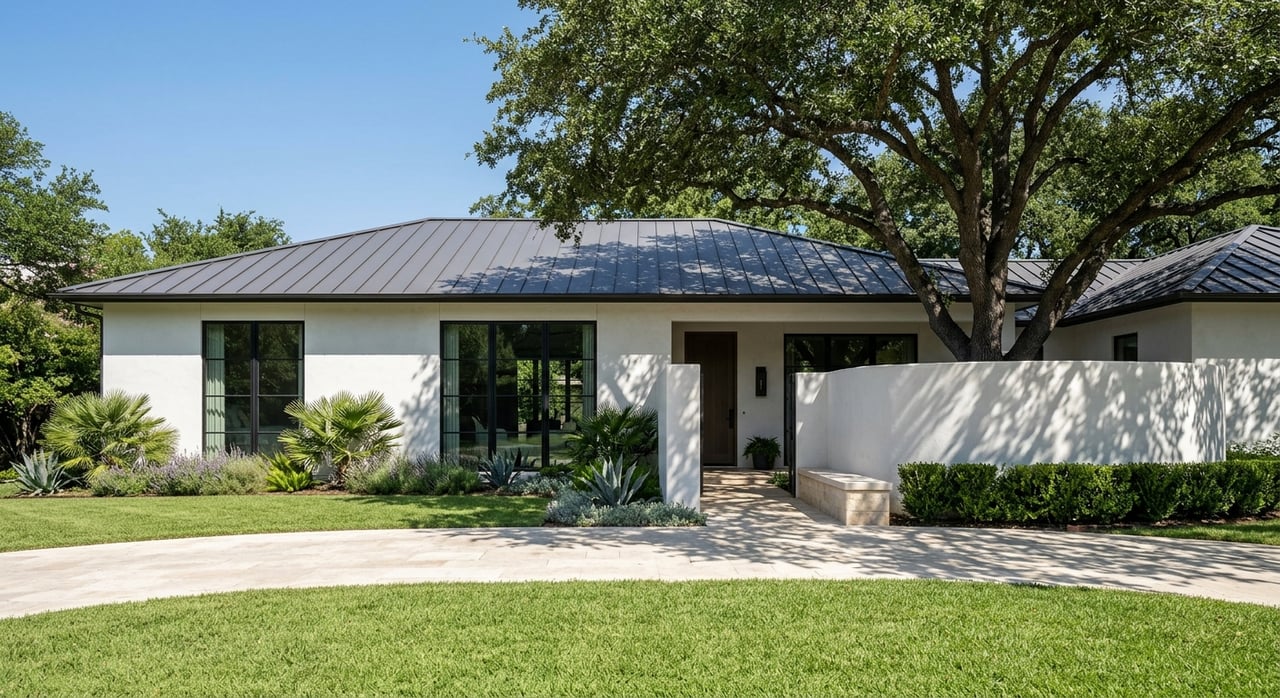
Non-gated living in Preston Hollow often delivers the open, established estate feel many buyers picture first. Many streets feature detached homes on generous lots, with privacy created more by setbacks, landscaping, and the scale of the property than by controlled access.
This is also where Preston Hollow shows its range. D Magazine notes that while the area includes some of the most expensive homes in Dallas, many streets are still lined with modest ranch-style homes. That blend can be part of the neighborhood’s appeal.
A non-gated setting may feel more relaxed and less managed, but that does not always mean fewer rules. Some non-gated areas still have active associations, deed restrictions, or architectural expectations.
For some buyers, the biggest draw is freedom of use. A non-gated property may offer more flexibility in how you approach updates, landscaping, or the overall rhythm of daily life.
Still, flexibility varies by address. Texas law makes clear that HOA rights depend on the governing documents along with state law, so a non-gated home can still be fairly rule-bound depending on the association.
There is also a lifestyle distinction that buyers often notice right away. Non-gated Preston Hollow tends to feel more connected to the wider neighborhood fabric, with mature trees, broad lawns, and a more open streetscape.
If you are drawn to the classic estate character of Preston Hollow, that open setting may be a major part of the appeal. For others, a more enclosed and managed environment may feel more comfortable.
One of the biggest misconceptions in this comparison is that only gated neighborhoods require close HOA review. In Preston Hollow, that is not the case.
Whether a home is behind a gate or on an open street, you should review the governing documents carefully before closing. The Texas management-certificate database allows buyers to search by association name, county, city, or zip code, and Chapter 209 requires associations to record a management certificate with key details.
For a Preston Hollow purchase, these documents can tell you far more than a community entrance ever will:
These records can help you understand ongoing costs, maintenance responsibilities, and how actively the association enforces its standards.
Texas law also provides some practical protections that buyers should know. Chapter 209 includes standards for records access, meetings, voting rights, and notice before many fines or enforcement actions.
Chapter 202 also limits what many deed restrictions can prohibit. For example, it places limits on restrictions involving certain flags, solar energy devices, and standby electric generators, while still allowing reasonable rules about placement, size, and safety.
It is tempting to assume a gated home will always bring a stronger resale result. The research does not support such a simple rule.
Studies cited in the report suggest that security features can add value in some markets, but the effect is not automatic or uniform. Higher fees, stricter rules, and infrastructure costs can offset some of the appeal.
In Preston Hollow, resale tends to come back to the full property story. Location, lot size, design, condition, privacy, HOA burden, and buyer lifestyle preferences all shape value.
Because Preston Hollow includes open estate streets, gated enclaves, condo and townhome pockets, and mixed-use areas, a gate may help one property stand out while doing very little for another. That is especially true in a market where buyers are often comparing not just entrances, but architecture, lot depth, renovation quality, and the feel of the block.
The best way to think about resale is this: gated and non-gated are different trade-offs, not different quality levels. In Preston Hollow, the address-specific package matters more than the label at the front entrance.
The right choice usually comes down to how you want to live. If you prefer controlled access, a more curated streetscape, and shared maintenance, gated living may be the better fit.
If you value an open neighborhood feel, potentially lower recurring HOA obligations, and more flexibility in how you use and update the property, a non-gated home may suit you better. Neither option is inherently better. The key is matching the property to your priorities.
In a neighborhood as layered as Preston Hollow, that kind of matching takes more than a quick drive through the gates or down the block. It takes careful review of the documents, a close read of the setting, and an understanding of how each micro-market supports a different kind of lifestyle.
If you are comparing homes in Preston Hollow, a thoughtful, property-by-property strategy will almost always serve you better than relying on a broad assumption. For tailored guidance on Preston Hollow’s luxury micro-markets, connect with Darla Ripley.
Stay up to date on the latest real estate trends.
August 20, 2026
August 13, 2026
August 13, 2026

August 6, 2026
July 23, 2026
July 16, 2026
July 9, 2026
July 2, 2026
June 25, 2026