How Green Spaces Define Highland Park Dallas Lifestyle
June 11, 2026
June 11, 2026
If a neighborhood feels easier to live in from the moment you step outside, green space is usually part of the reason. In Highland Park, parks, creek corridors, shaded streets, and open-air gathering spots do more than add beauty. They help shape how you walk, pause, run errands, and settle into the rhythm of the day. Let’s dive in.
Highland Park is compact at 2.26 square miles, with about 8,900 residents, and the Town says it sits roughly 3 miles north of downtown Dallas. Even with that small footprint, outdoor space has long been central to how the community was planned. The Town notes that Highland Park was named for its higher elevation and that 20% of developed land was reserved for park space.
That foundation still shows up in daily life now. The Town’s Parks Department maintains 22 park locations, 12 landscaped traffic islands, about 59.3 acres of green space, 8 tennis courts, 3 playgrounds, and a town swimming pool. Trust for Public Land’s ParkServe page also reports that 98% of residents live within a 10-minute walk of a park.
Those numbers help explain why Highland Park often feels less like a place with parks and more like a place organized around them. In a compact setting, nearby green space changes how you move through the day. A short walk can become part of your normal routine instead of a planned outing.
One of the clearest ways green space shapes life in Highland Park is simple: it is close. With so many residents living within a 10-minute walk of a park, outdoor time can fit into the small spaces of a busy schedule. That might mean a morning stroll, a quick loop with a stroller, or an evening walk before dinner.
Because the Town maintains many park locations rather than relying on one major destination, outdoor life feels distributed across the community. You are not planning your whole day around getting to one big park. Instead, the landscape supports shorter, more repeatable routines that are easy to revisit.
That kind of access matters in practical ways. When parks are nearby, they tend to become part of your weekly pattern, not just a weekend activity. In Highland Park, the layout supports that steady, everyday use.
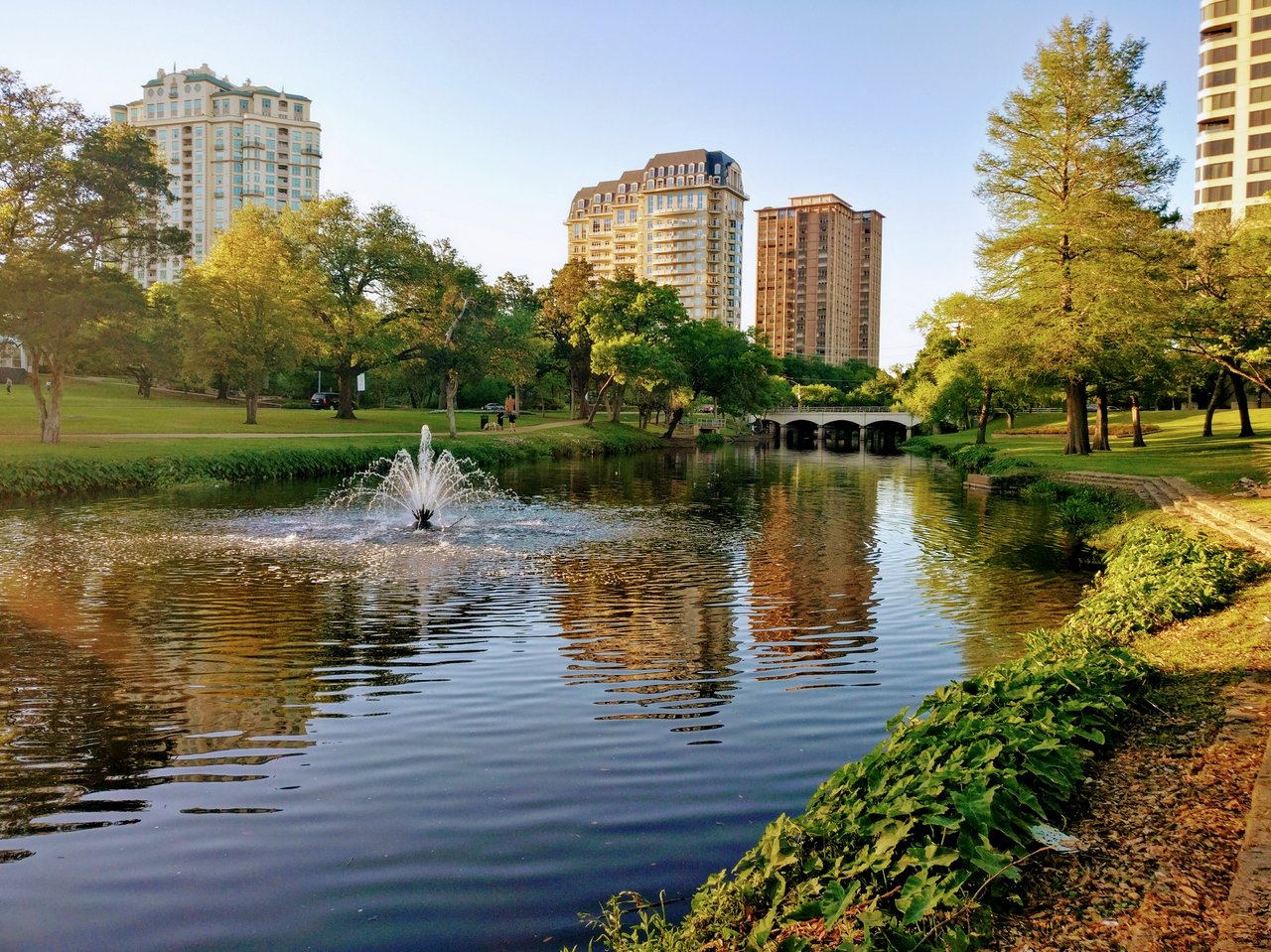
Lakeside Park is the signature green space many people associate with Highland Park, and it helps define the area’s outdoor character. The Town describes it as more than 14 acres of landscaped grounds along Turtle Creek between Beverly Drive and Armstrong Parkway. It includes walking paths, benches, scenic views, the bridge atop the Turtle Creek Dam, the Teddy Bear statues, and the Read Memorial.
This is the kind of park that supports both movement and pause. You can take a casual walk, sit for a few quiet minutes, or use it as a familiar route in the middle of an otherwise busy day. Its scale and layout make it feel scenic without feeling remote.
The Town also says improvements to Lakeside Park were completed in 2024. That detail matters because it shows Highland Park’s green spaces are not simply historic features being preserved. They are actively maintained and refreshed as part of the Town’s day-to-day stewardship.
Lakeside Park may be the best-known name, but Highland Park’s daily outdoor life does not stop there. Prather Park, across from Town Hall, features paths and benches along Hackberry Creek, along with a pickleball court set among towering trees. That mix supports both quiet use and light activity close to the civic center of town.
Connor Park adds another layer to the pattern. The Town describes it as a place of passive recreation with foot paths and a vista of Turtle Creek. It reinforces the idea that in Highland Park, green space is not always about big programming or large crowds.
Together, these parks suggest something important about the neighborhood experience. Outdoor living here is often made up of shorter walks, familiar views, and repeat visits that fit naturally into your routine. That can make a neighborhood feel calmer, more connected, and easier to enjoy every day.
Hackberry Creek helps tie several of these outdoor experiences together. It is not just a backdrop. It acts as a living corridor that shapes views, paths, and the feel of nearby public space.
The Town’s Hackberry Creek Master Plan describes a conceptual effort to conserve and restore the creek. Future improvements may include pedestrian walkways, benches, landscape lighting, and irrigation, and the page says the Town Council has about $5.8 million available in the 10-year capital improvement plan for the project.
For residents and buyers watching the area closely, that signals ongoing investment in the public realm. It suggests Highland Park’s green-space story is continuing to evolve. The goal is not only to keep these spaces attractive, but to strengthen how they function in everyday life.
Parks are only part of the picture. In Highland Park, the tree canopy also plays a major role in how the neighborhood feels as you move from one place to another. The Town’s Tree Program says trees soften the lines of an urban work and beautify the community.
That idea is easy to recognize on the ground. Mature trees add shade, frame the streets, and make short walks more comfortable through much of the year. They also create continuity between homes, sidewalks, traffic islands, and parks, so the landscape feels connected rather than fragmented.
What makes this especially notable is that the look is supported by active standards. The Town requires tree limbs to be trimmed to 8 feet above sidewalks and 10 feet above streets, with shrubs cut back to the pavement edge. In other words, the tree-lined character of Highland Park is not accidental. It is maintained with intention.
Highland Park’s green spaces do not read the same way in every season, and that helps keep outdoor life visually engaging. The Town says that each spring, more than 8,000 azaleas bloom in the last weeks of March and first weeks of April. Flowering bulbs, pansies, dogwoods, crabapple, and redbud trees add to that seasonal shift.
This changing landscape can subtly shape how a place feels to live in. A familiar walk looks different as blooms come in, shade deepens, or planting beds change through the year. That variety gives even short daily routes a sense of movement and freshness.
The Town also recognizes Arbor Day by planting a tree each year. That tradition reflects a larger pattern of stewardship. In Highland Park, beauty is not treated as a one-time design choice, but as something renewed over time.
Another reason Highland Park’s green spaces feel distinctive is that they are not purely functional. The Town’s public art program adds recognizable landmarks and visual moments across several outdoor spaces. At Prather Park, the Town lists Frolicking Pixies and Grace Eternal, while Carriage Ride sits at Beverly and St. John along Hackberry Creek, and The Teddy Bears are part of Lakeside Park.
These features help turn a walk into something more memorable. They give parks a curated, recognizable identity and add a sense of place that goes beyond paths and benches. For visitors, they are visual anchors. For residents, they can become part of the familiarity that makes a neighborhood feel personal.
That blend of landscaping and art gives Highland Park’s outdoor spaces a slightly formal, carefully composed quality. It is one more way green space contributes to daily experience, not just scenery.
The outdoor lifestyle in Highland Park extends beyond its parks. Highland Park Village adds another layer to the routine because it keeps shopping and dining in an open-air setting rather than moving daily life indoors. Visit Dallas describes it as Dallas’ premier open-air luxury shopping and dining destination, built in 1931 and widely regarded as the country’s first true shopping center.
For everyday living, that open-air format matters. Running errands, meeting for coffee, or stepping out for dinner can still feel connected to the neighborhood’s wider streetscape and landscape. You stay in the flow of the outdoors rather than leaving it behind.
This helps explain why Highland Park often feels cohesive as a lifestyle setting. Parks, tree-lined streets, creekside spaces, and open-air destinations all support a walk-oriented environment. The result is a neighborhood where outdoor space shapes not only what you see, but how you live.
If you are considering a move to Highland Park, green space is worth looking at as a daily-living feature, not just an amenity on paper. The Town’s layout, maintenance standards, creek corridors, and park access all suggest that the outdoor environment plays a practical role in how residents use the neighborhood. It can influence your routines in small but meaningful ways.
That can be especially valuable if you want a home in an area where beauty and function work together. A nearby path, shaded sidewalk, or familiar park bench may sound simple, but those details often shape how connected you feel to a place over time. In Highland Park, those details appear to be built into the fabric of the town.
When you evaluate a home here, it helps to think beyond the property line. Consider how the surrounding landscape supports the life you want to live, from quiet morning walks to open-air afternoons close to home. In a neighborhood this compact and this carefully maintained, the setting is part of the story.
If you are looking for a thoughtful perspective on Highland Park and the lifestyle details that shape long-term value, Darla Ripley offers the kind of local insight and stewardship that can help you make a confident move.
Stay up to date on the latest real estate trends.

October 23, 2026
October 15, 2026
October 1, 2026
September 24, 2026
September 17, 2026
September 10, 2026
September 3, 2026
August 27, 2026
August 20, 2026