The Goats Have Left Northaven Trail. Here's What They Left Behind.
October 29, 2026
North Dallas Neighborhood News
October 29, 2026
North Dallas Neighborhood News
Walk west from the Inwood Road parking lot this week and the no-mow meadows that grew tall all season have been grazed down. To anyone who missed the first ten days of October, it reads as a cleanup.
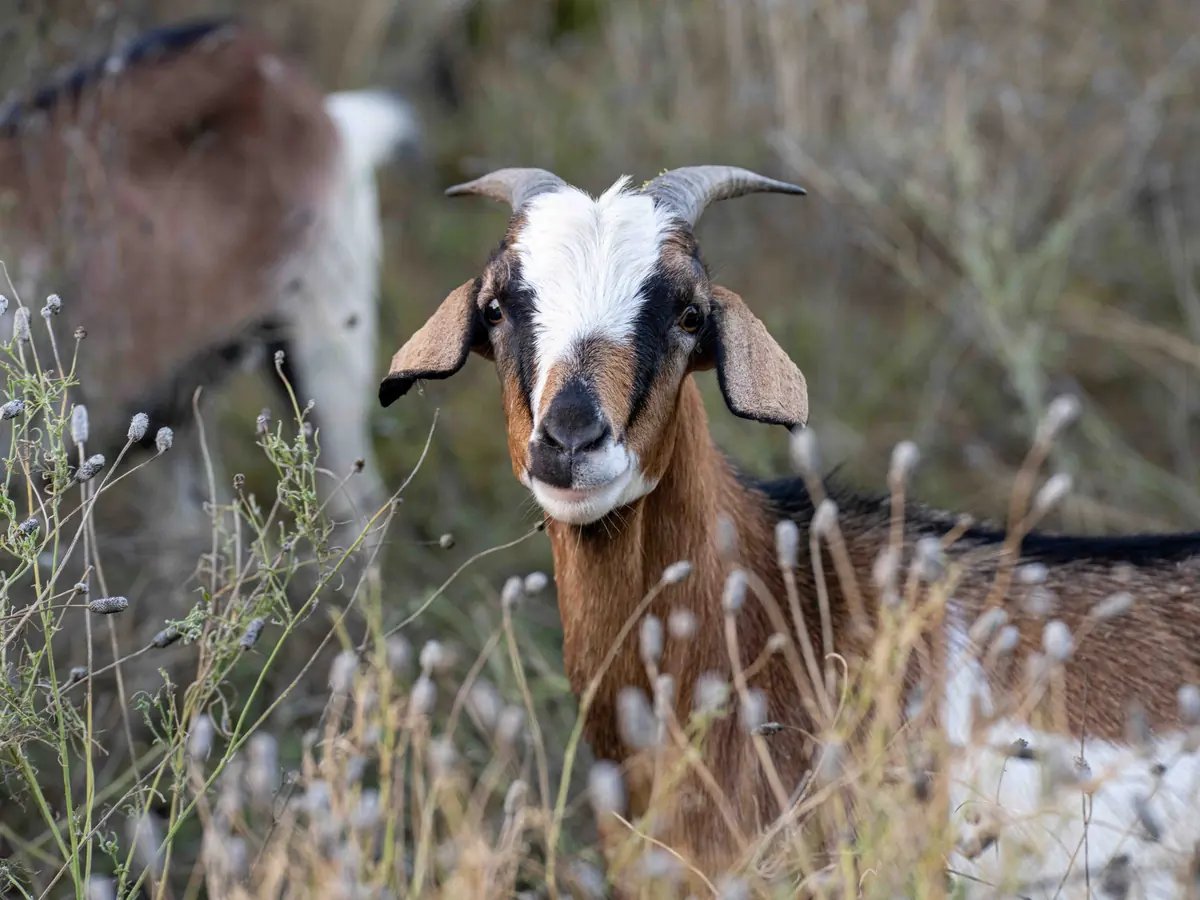
It is actually a planting. About 450 goats and 200 sheep grazed 55 pollinator areas between US-75 and Webb Chapel Road from October 2 through October 10, and native wildflower seed went into the ground while they were still at work. The ground that looks emptiest along Preston Hollow's stretch of the trail is where next spring's color is already seeded.
Northaven TAILS is run by the Friends of Northaven Trail, and the program's job is narrower than it looks. The group's TAILS project page says getting spring blooms takes three things: clearing dense thatch, loosening the soil, and getting seed down to the ground. A mower handles the first one badly.
Will Dawson, fundraiser chair for the Friends' board, explained the difference to the Preston Hollow Advocate. "Mowing unfortunately spreads weeds; by contrast, the animals will eat many of the weeds down to the roots," he said. He also said mowing leaves a thick layer of thatch that blocks sunlight and keeps seed from reaching soil, while goats and sheep eat the growth rather than leaving it lying there. The two animals split the work, too. "Goats go after dense and woody growth, and sheep graze the grasses," Dawson told the Advocate.
The 2026 change was timing. In earlier practice, the no-mow zones grew all season, got cleared in fall, and were reseeded after. This year the Friends spread native seed while the herd was still grazing, so the animals' hooves would press it into the soil and improve germination. The flock went from being the prep crew to doing the planting.
The program also grew a good deal in its second year:
2025 season | 2026 season | |
|---|---|---|
Acres grazed | 9 | 15 |
Road crossings | Herd trailered over each road | Walked across with Dallas Police assistance |
Grazing areas sponsored | Not reported | All 55 |
That middle row is easy to skim past, but it shows what the program now costs to run. Dawson told the Advocate that trailering the herd at every crossing in 2025 was "logistically challenging and expensive." This year Dallas Police officers walked the animals across Hillcrest Road, Preston Road, Inwood Road, Midway Road, Marsh Lane and Royal Lane. The goats came from Oklahoma and the sheep from West Texas, and professional herders watched them and their fencing around the clock.
The seed is specific. According to the Friends' Wildflower Meadow FAQ, the group buys from Native American Seed in Junction, Texas, and uses two mixes, the Blackland Prairie Mix and the Bee Happy Mix. Both are native to Texas and to the Blackland Prairie ecoregion that North Dallas sits on, and both include grasses and flowering species, annuals and perennials.
That mix explains a complaint the FAQ answers directly, which is why the meadows grow so much tall grass. Tall grasses are a natural part of the Blackland Prairie and a critical part of a wildflower meadow, the FAQ says, and they won't look like turf. If your house backs onto the trail, the same page has a reassuring answer about whether these plants will spread into your beds. Most spread by rhizomes or drop seed nearby, unwanted volunteers come out easily with a mower, and households along the trail have reported no trouble with plants "escaping" into their yards.
What comes up next is an expectation. The Friends hope the freshly grazed ground and new seed will mean better germination and more native wildflowers along the trail next spring. The TAILS page describes the cycle as seed planted on freshly grazed ground "so the blooms return next season." Through winter, the meadow zones will mostly look like nothing much. The real test comes in spring.
Since the grazing ran the whole length between US-75 and Webb Chapel, every access point has some of it. But the trail's permanent gardens and rest stops make better places to watch over the months ahead, because they give you a fixed spot to come back to. Here they are from east to west, using the Friends' own map and access-point guides:
Stop | What's there |
|---|---|
US-75 bridge | A mural on the Northaven Trail Bridge, plus parking |
St. Michaels Drive | A rest area and a drinking fountain |
Edgemere Road respite | Picnic tables, shade, and one of the trail's six information kiosks |
Royalshire Drive | The Founders Gardening Club of Dallas garden just to the west, with separate fountains for people and pets |
Northaven United Methodist Church | A shaded respite under live oaks |
Bachman Creek bridge, near Strait Lane | A mural under the bridge painted by a local high school student |
Welch Road respite | Fountains for people and pets, picnic tables under live oaks, and a managed garden |
Joes Creek bridge, near the Semones YMCA | Benches on both sides of the creek |
Royal Park, Townsend Drive | A managed garden just north of the park, plus north and south parking lots |
Pensive respite, near Webb Chapel | Several managed gardens, fountains for people and pets, a kiosk, a bike repair station, and seating |
The Bachman Creek crossing ties this corridor to the same creek that gave Bluffview its name, which we covered when the Bachman Creek meadow there reopened to walkers. The Joes Creek bridge is worth a return visit in a few weeks for its own reason. The Friends' guide says it gets decorated with garland and holiday ribbons every winter.
The meadows depend on people far more than the trail's paved, city-built look suggests. The Friends of Northaven Trail call themselves a 100% volunteer-run organization that needs community support to function. The trail's homepage calls TAILS a 100% donor-funded project. The Advocate reported that the group is trying to raise $60,000 to cover the cost of organizing TAILS. Funding comes through individual gifts to "Give to the Graze," seasonal sponsorships of grazing areas that start at $500, and a grant from the Communities Foundation of Texas. For comparison, the inaugural 2025 season raised $34,915 through Give to the Graze.
One thing is outside the volunteers' hands. The City of Dallas Parks Department is responsible for mowing the trail, and the FAQ says the city will mow after a prolonged drought or if it judges there's a strong fire danger. A dry winter could change what shows up in spring. Trail users who see a problem can report it on the Friends' site, which routes issues to the city's 311 service when needed.
The perennial gardens are where an ordinary neighbor makes the most difference. The Friends' Adopt a Garden page currently shows 6 of 8 gardens needing adoption. The eight are at Freda Stern, Grace Bible Church near Inwood, Hillcrest, Pensive, Royal Park on Townsend, Royalshire, St. Michaels and Welch. Gardening clubs maintain the Hillcrest and Royalshire beds. The work is occasional weeding and pruning, and no experience is needed. The page estimates about an hour a week in spring and fall and an hour a month in summer and winter, and a volunteer meets new adopters on site to show them what to do.
Three dated mornings come up before mid-November:
The Halloween work day covers the meadows just west of Inwood Road, the same stretch where this year's grazed and seeded ground starts closest to a parking lot.
Many homes between Webb Chapel and US-75 sit a short walk from one of these gardens, and that is the kind of detail I make sure buyers hear about. If you'd like to talk about the homes along this corridor, Darla Ripley would be glad to hear from you. Let's Connect.
Stay up to date on the latest real estate trends.
November 5, 2026
North Dallas Neighborhood News
October 29, 2026
Courtsey Carol Vig Photography

October 23, 2026
October 15, 2026
October 1, 2026

September 24, 2026
September 17, 2026
September 10, 2026
September 3, 2026