How the Katy Trail Will Change What Art You See on Your Run
October 1, 2026
October 1, 2026
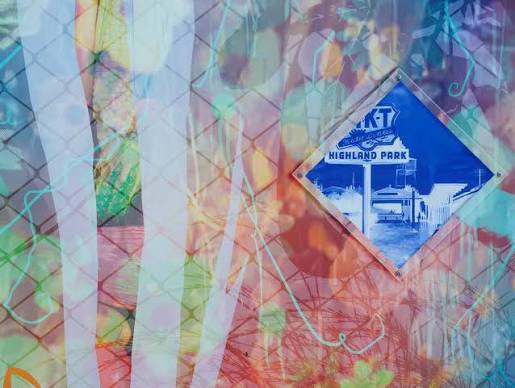
Amanda Dillard Shufeldt's husband was at a conference in Las Vegas a while back, making the kind of small talk strangers make, when someone asked where he was from. Dallas, he said. "Do you know the Katy Trail?" the stranger asked back, then started describing the sculptures. Dillard Shufeldt runs the Katy Trail's art program, and when she heard the story she took it as proof of something she already suspected: the rotating bronze figures and steel installations that show up along the trail's 3.5 miles have started to define the place as much as the running path itself.
That program is about to change shape entirely. Starting next spring, the Katy Trail will host the KTX Biennial, described by its organizers as Texas' first biennial dedicated exclusively to public art. It is not a bigger version of what the trail has done since 2021. It is a different system altogether, and the difference matters for anyone who uses the trail as part of an ordinary week rather than as a place to visit once.
For five years, the Katy Trail's art program worked on a rolling basis, with works arriving and coming down over time. Iván Argote's "Wild Flowers," a series of cast bronze planters shaped from a fragmented figurative statue, sat at Victory Overlook from March 2024 to May 2025. Will Boone's "Turkey Vulture" occupied a different stretch from October 2023 to April 2025. Before that, Sara Cardona hung five sculptures referencing ceramic seed pots and Japanese Akari lanterns from the trees in a piece called "Seeding the Path," and Hadi Fallahpisheh installed four brightly painted steel sculptures under the title "Guest." Eddie Martinez, Carolyn Salas, Nic Nicosia and the pairing of Jeff Gibbons and Gregory Ruppe have all had turns as well.
That model ends with the current cycle. Dillard Shufeldt has described the new approach directly: rather than presenting work on a rolling basis, the trail will invite a new curator every two years to build a cohesive exhibition of ten to twelve works spanning the full corridor at once. The Katy Trail is trading a rolling program of works for something closer to a museum show that happens to be outdoors and free, stretching from one end of the path to the other.
The inaugural curator is Jovanna Venegas, who has held the curator post at SculptureCenter in New York since January 2024 and spent six years before that at the San Francisco Museum of Modern Art, where she curated commissioned projects and served as a curatorial advisor for the 2022 Whitney Biennial's border-region programming. She has never curated an outdoor show before this one. In an interview with KERA News, Venegas pointed to the scale of the existing audience as the draw, calling it a site of potential precisely because of how many people already pass through:
"The trail already has a set of users, two million visitors a year..."
The exhibition opens in spring 2027, timed to the Dallas Art Fair, and will remain up for around eighteen months before the next curator takes over. Organizers say the specific artists and where each piece will sit along the trail are still being worked out over the coming months, so the corridor as it exists right now, the version with familiar bronze figures at familiar mile markers, is the last version before the model changes.
While that announcement was still circulating this spring, a second and less visible project has been moving through construction on the trail's north end, between Knox and Harvard. Friends of the Katy Trail's own capital campaign materials describe that stretch bluntly: mostly mowed grass, weeds and rocks, with cedar trees dying off and erosion problems that let silt build up on the soft-surface path, creating a fall hazard for anyone using it. The 2017 Friends of the Katy Trail Master Plan called for native grasses, wildflowers and additional trees on that segment, a plan that sat unbuilt for years while the organization focused improvement work further south.
The Knox-to-Harvard project finally has money and a schedule. The total cost is set at $3 million, with the City of Dallas pledging to match $1 million against $2 million the nonprofit had to raise privately. As of May 2025, Friends of the Katy Trail had collected more than $1.5 million toward that private half, with named support from Lyda Hill Philanthropies, the Perot family, Steven Rayl and Scot Presley, the Budd Family Foundation, Uptown Dallas Inc., the Eugene McDermott Foundation and the Richard King Mellon Foundation. The published timeline runs fundraising through 2024 and 2025, design work in 2025, and construction across 2026, which means the version of that stretch you can see right now, mid-construction, is not the finished one.
Both projects trace back to the same pressure. According to the nonprofit's own figures, the trail's annual visits jumped from 2 million in 2022 to 4 million by 2024, a doubling in two years. A trail built for a smaller crowd is being asked to hold a much bigger one, and that shows up in two different ways at once this year: a physical rebuild of the Knox-to-Harvard segment, and an art program ambitious enough to justify calling in a New York museum curator rather than continuing a rolling program.
If you run, walk or bike the Katy Trail regularly, the near-term version of this story is mostly about patience. The Knox-to-Harvard construction will keep that stretch in some state of disruption through the rest of the 2026 construction window, and the payoff, native plantings and a rebuilt soft-surface path instead of eroding rock and dying cedar, won't be visible until the work wraps. The art side moves on a slower clock still. Venegas and her team are in the process of extending invitations to artists now, with some Texas-based representation planned alongside the international names, but nothing will be installed before spring 2027.
What changes sooner is smaller and easy to miss: this fall is the last stretch where the Katy Trail's art still works the old way, with works arriving and coming down on a rolling basis. The next cycle won't be another rolling rotation. It will be an entire show. In The Art Newspaper, Dillard Shufeldt described the community as not only open to contemporary art in this setting but genuinely excited by it, and the roughly four million annual visits the trail logged in 2024 are effectively the built-in audience Venegas is designing for before a single piece is confirmed.
For now, the trail still reads the way it always has: familiar bridges, a run that ends wherever you decide to turn around, maybe a stop for dinner along Cedar Springs once the trail spits you out near Uptown's restaurant strip. That won't be true forever. The next time you notice a new sculpture on your usual route, it's worth remembering that it likely won't be alone.
If you're the kind of Uptown resident who already has a favorite bench along the Katy Trail or a strong opinion about which sculpture should never have come down, Darla Chapman Ripley would genuinely like to hear about it. Say hello next time you see her out on the trail.
Stay up to date on the latest real estate trends.

October 23, 2026
October 15, 2026
October 1, 2026
September 24, 2026
September 17, 2026
September 10, 2026
September 3, 2026
August 27, 2026
August 20, 2026