Turtle Creek's Bridges Are Finished. The Park's Bigger Plan Is Just Getting Started.
September 3, 2026
September 3, 2026
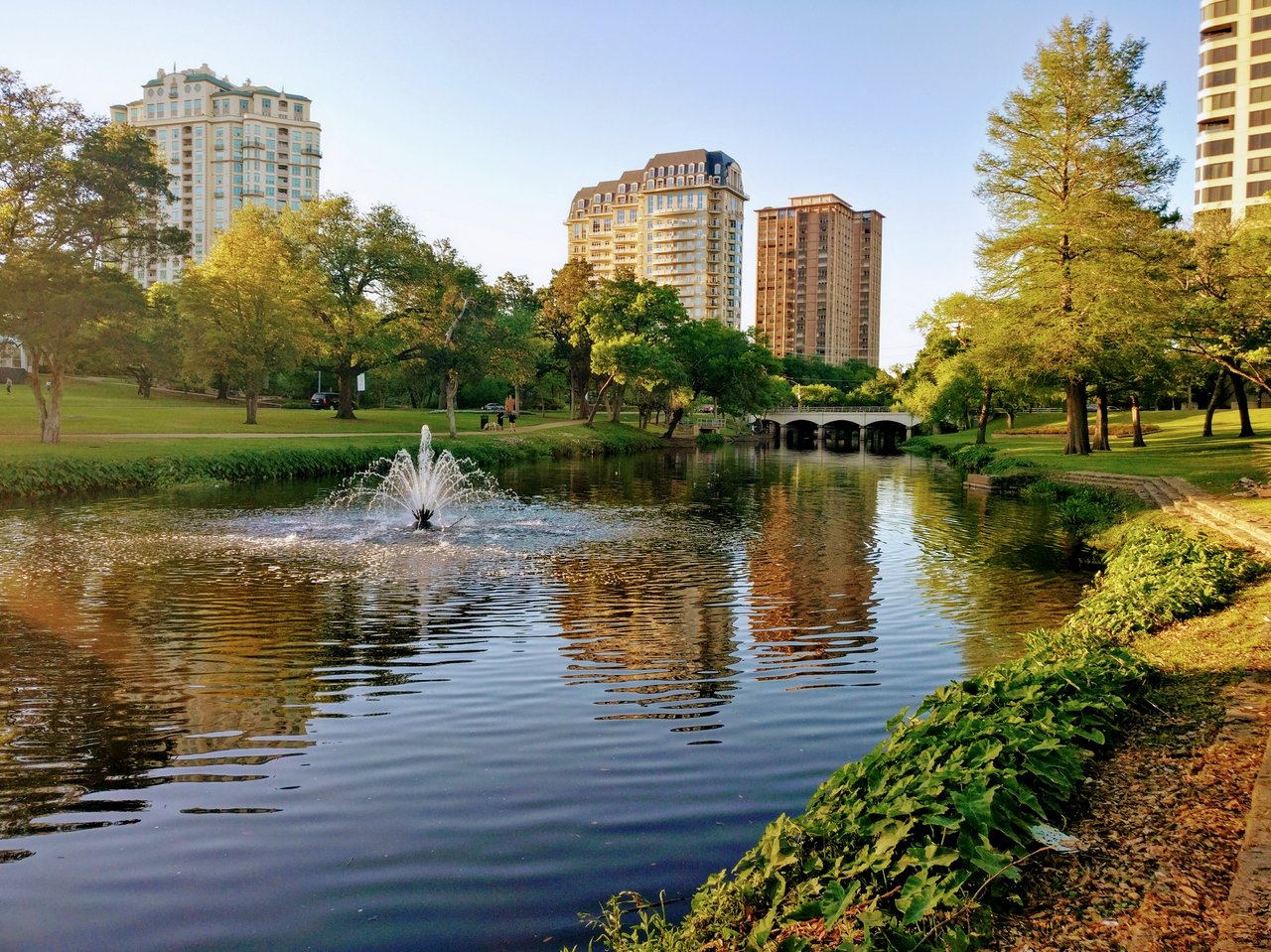
For most of this year, the news out of Turtle Creek Park was scaffolding and orange cones. Eight small bridges, the kind you cross without thinking twice on a walk to Katy Trail or a drive down Turtle Creek Boulevard, were wrapped in construction fencing while crews power washed a century of grime off their railings. That project wrapped in May with a ribbon cutting at Oak Lawn Park. It was the kind of tidy, photogenic civic story that gets a news segment and a round of applause.
It was also, it turns out, the warm-up act.
The bigger story landed quietly in early August, and it has almost nothing to do with bridges. It has to do with how Turtle Creek Park intends to pay for itself for the next fifty years, and it borrows its playbook from a very different city park three states away.
The Bridges of Turtle Creek initiative restored eight crossings along the corridor: Hall Street, Bowen Street (1916), Fairmount Street (1918), Maple Avenue (1919), Blackburn Avenue (1930), Lemmon Avenue (two separate spans, one from around 1930 and a second from 1963), and Stonebridge Drive (1936). The work included lighting upgrades, graffiti removal, retaining wall repairs, fencing, and pedestrian safety fixes, all coordinated by the Turtle Creek Association, the Turtle Creek Conservancy, and the City of Dallas.
The detail that made the local coverage worth a second read is that none of it came from tax dollars. The entire restoration was funded through private philanthropy, a point the partners repeated often enough that it clearly mattered to them.
There's history under some of these crossings that most people driving over them never think about. When the City of Dallas built the Hall Street Bridge, a Dallas Morning News item from January 1910 covered it as a solution to dangerous traffic grades, at a cost of $4,700. Stonebridge Drive did double duty from the start: when the Turtle Creek Park Subdivision launched in 1926, developers used the bridge itself as the pitch, the gateway to wooded hills and a creekside address. A century later, neighbors still drive over the same crossing to get home.
As reported by Candy's Dirt, Dallas City Councilmember Paul Ridley, who represents the district, put it simply: the bridges aren't just structures, they're what connects the neighborhoods around the creek to each other and to their own history.
The bridges weren't the first time private money quietly rebuilt something in this park. The Cedar Springs Cascade Waterfall went through its own full restoration, a $300,000 project built on a $200,000 gift from Together for Good, the Salka Family Impact Group, stacked with another $100,000 gift from a separate donor. Add the bridges, funded the same way, and a pattern starts to look less like a coincidence and more like a system.
Turtle Creek Conservancy president and CEO Tiffany Divis framed the bridge completion as proof of that system working, calling it evidence of what collaboration and private investment can do for a shared public space. It's a reasonable read of the numbers. Two major infrastructure projects, well over half a million dollars combined, and the city budget never touched either one.
That track record is exactly why the announcement that came next didn't feel like a leap.
On August 2, the Conservancy announced a new capital campaign called Turtle Creek for Good, as detailed in Candy's Dirt's report. The framing is explicit: the partnership is modeled after the Central Park Conservancy in New York City, the organization that transformed how one of the country's most famous parks is funded and maintained. That's a different kind of ambition than fixing bridges. Central Park Conservancy exists to fund permanent, ongoing stewardship, not one-off repairs. Turtle Creek Park just signaled it wants the same standing.
The campaign's first visible project is a National Fitness Court Studio, developed with Blue Cross Blue Shield of Texas as a partner, planned for the park's East Parcel. Once it opens, it will be the first publicly accessible fitness court of its kind in a Dallas public park, which means the equipment and the model are new to the city, not just new to this park. Beyond the fitness court, the East Parcel plans also include an Infinity Golf course, a recreational amenity aimed at bringing a wider range of ages and abilities into the same green space.
The campaign's real target, though, is the South Parcel and a permanent endowment for the park's twenty acres. An endowment changes the math. Instead of raising money project by project, the way the bridges and the waterfall were funded, the Conservancy is trying to build a fund that pays for care indefinitely. That's the difference between patching a park and owning its future.
More than 44,000 people currently live and work within a one-mile radius of Turtle Creek Park, according to the Conservancy's own figures released alongside the August campaign announcement. That's a lot of daily foot traffic crossing bridges that, until this spring, were quietly falling apart at the edges.
For anyone who walks a dog along the creek path, runs the loop near Reverchon, or has ever rented Arlington Hall for a family milestone, the practical shifts are already visible and more are coming. The bridges you cross now have working lights and clean rail lines instead of graffiti and rust streaks. In the next phase, the East Parcel adds a free outdoor fitness amenity backed by an actual health insurer's investment, plus a golf course designed for casual, walk-up use rather than club membership. None of it requires a car, a reservation, or a membership fee to notice the difference.
The thing worth sitting with is what this says about how the neighborhood around the creek sees its own park. Two donor-funded projects in a row, followed by a campaign explicitly built to make future funding permanent, isn't the behavior of a neighborhood treating its park as a nice amenity. It's the behavior of a neighborhood that has decided the park is infrastructure, worth the same long-term investment logic usually reserved for roads or schools, just funded by the people who live around it instead of the people who tax them.
That's a different story than "the bridges got fixed." The bridges were proof of concept. The endowment is the actual plan.
If you're the kind of Turtle Creek resident who reads local news past the headline, keep an eye on how Turtle Creek for Good develops over the next year. The fitness court and the golf course will be the visible parts. The endowment, if it lands the way Central Park's did, will be the part that quietly outlasts everyone currently writing checks for it.
For more on what's changing across Dallas's close-in neighborhoods, Darla Chapman Ripley covers the local details that don't make it into the citywide roundups. If you're curious how a story like this one connects to what's happening with homes and values along the creek, reach out and let's talk it through.
Stay up to date on the latest real estate trends.
October 23, 2026
October 15, 2026
October 1, 2026
September 24, 2026
September 17, 2026
September 10, 2026
September 3, 2026
August 27, 2026
August 20, 2026