Highland Park Village's Miron Crosby x Carolina Herrera Story
August 27, 2026
August 27, 2026
A pink carpet does not go up in Highland Park Village by accident. Earlier this year, blush and fuchsia floral installations framed the entrance to Carolina Herrera's newly expanded storefront at 70 Highland Park Village, and the guest list read like a summit rather than a store opening. Wes Gordon, the house's creative director, flew in. Emilie Rubinfeld, its president, did too. So did Lizzie Means Duplantis and Sarah Means, the sisters who founded Miron Crosby, the bootmaker whose flagship sits a short walk away in the same Village.
If you have lived in Highland Park for any stretch of time, you have watched brands come and go along that arcade without much ceremony. A storefront changes hands, a familiar awning disappears, a new name goes up. This one was different, and the difference is worth understanding, because it tells you something about how the Village actually works that a simple new-store announcement never would.
Carolina Herrera did not open a pop-up or refresh a window display. The Houston Chronicle reported that the house relocated its Dallas store into a 3,500-square-foot space at 70 Highland Park Village, a meaningful expansion from wherever the brand had been operating before. Retailers do not commit that kind of square footage to a market they consider secondary. They do it in cities where the numbers already justify the bet.
That alone would be a modest story. What made it a story worth a pink carpet and two executives on a plane was what the house chose to do with the moment: instead of marking the expansion with a solo campaign, Carolina Herrera partnered with a Dallas-born brand to co-sign the milestone.
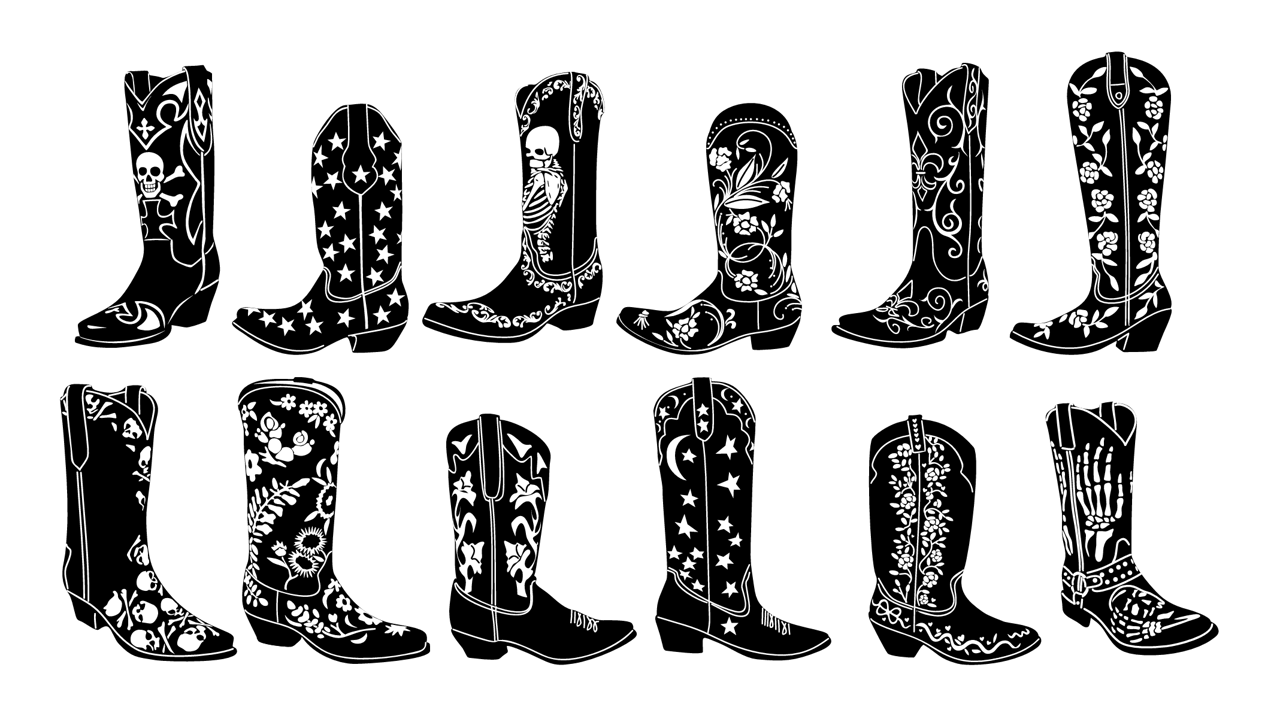
Miron Crosby was founded by two sisters who grew up on their family's West Texas cattle ranch before spending years living and working in New York. Their bespoke boots are made by hand across two production houses, one in Mercedes, Texas, and one in León, Mexico, by artisans with decades of experience in the craft. The brand's flagship remains in Highland Park Village, which made it a natural, if unexpected, partner for a global couture house trying to prove it understood Texas rather than just occupying real estate in it.
The resulting collection was small on purpose. Two boot styles, the Georgia Metallic and the Whitney Noir, along with a lasso-embroidered chambray blouse referencing Carolina Herrera's signature white button-down, launched with only 75 pairs of each boot produced. The pieces sold exclusively through Carolina Herrera boutiques in Dallas and Houston, plus the brand's e-commerce site. No New York rollout, no Los Angeles exclusive. The debut market was two Texas cities, full stop.
As the Houston Chronicle reported, Duplantis explained the creative starting point plainly:
"We fell in love with the cabbage rose and wanted to incorporate tulips and a lazy star."
The team worked from an early look at Carolina Herrera's Madrid runway show, then translated that inspiration into leather and stitching rather than fabric. It is a small detail, but it matters: this was not a licensing arrangement where a global house slapped its name on a regional product. The design process ran in both directions.
Residents who spend a normal Saturday moving through the Village already sense something the retail trade press keeps confirming: this shopping center has never worked the way a typical luxury district does. Most cities segregate their global houses from their local names, with international flagships clustered in one wing and homegrown boutiques pushed to a side street. Highland Park Village puts them on the same block, often in the same building.
The Village's own seasonal styling makes this explicit. Its most recent lookbook paired global names with local restaurants and shops in ways that only make sense if you already walk the property: Alice + Olivia styled at Bird Bakery, Valentino set inside Café Pacific, Miu Miu photographed at Fachini, and Miron Crosby's own pieces shown alongside Chanel, Dior, and Hermès rather than segregated into a separate "Texas brands" section. Homegrown names like La Vie Style House, Deno's, and St. Michael's Woman's Exchange sit in the same directory as Cartier and Harry Winston, not as a curiosity but as the expected mix.
The Carolina Herrera and Miron Crosby collaboration is that same instinct taken one step further. Instead of simply operating next to a local brand, the global house asked to work with one. A local real estate blog that tracks the broader Park Cities restaurant and retail scene, writing recently, singled out this store opening as the most talked-about of the year in the neighborhood and read it as evidence that Village foot traffic is staying weighted toward locals rather than visitors passing through. That reading holds up. A collaboration this specific, this small in volume, and this tied to two Texas cities is not built for a tourist buying a souvenir. It is built for someone who already knows the Village and will notice the difference between a flagship that merely exists here and one that bothered to partner with a neighbor.
If you want to see the story rather than just read about it, a few specifics are worth knowing before you go:
None of this requires a special occasion to appreciate. It is the kind of detail that changes how an ordinary errand feels, the difference between walking past a storefront and understanding why it looks the way it does.
It would be simple to file this whole story under fashion news and move on. But the more interesting read is about what a global brand's choices say about a neighborhood's standing. Carolina Herrera did not need to collaborate with anyone to justify a bigger store. Retailers expand into growing markets constantly without any local gesture attached. The decision to pair that expansion with a hometown name, to fly in a creative director and a company president for it, and to keep the debut confined to Texas rather than opening it nationally, is a deliberate signal that the house sees this specific address as more than a convenient zip code.
For residents, that is the quieter version of the story worth holding onto. The Village has always mixed global houses with local names on its directory. What changed this year is that one of those houses decided the mix was worth building a product around, not just occupying space next to it.
If you have wandered Highland Park's tree-lined blocks and wondered what else in the neighborhood tends to reward that kind of attention, our post on how Highland Park's green spaces shape daily life covers similar ground away from Preston Road. And if a Saturday in the Village is already part of your routine, a walk around the Village rounds out what else the block has to offer beyond its storefronts.
For everything else about calling Highland Park home, from the neighborhoods around it to the people who steward its properties, Darla Chapman Ripley is always glad to talk. Let's Connect.
Stay up to date on the latest real estate trends.
October 23, 2026
October 15, 2026
October 1, 2026
September 24, 2026
September 17, 2026
September 10, 2026
September 3, 2026
August 27, 2026
August 20, 2026